
Futures
-
Kenya’s Konza Technology City
Kenya’s plan for a 5,000-acre “Silicon Savannah” some 30 miles from Nairobi. >>>
-
Africa’s Mobile Future(s)
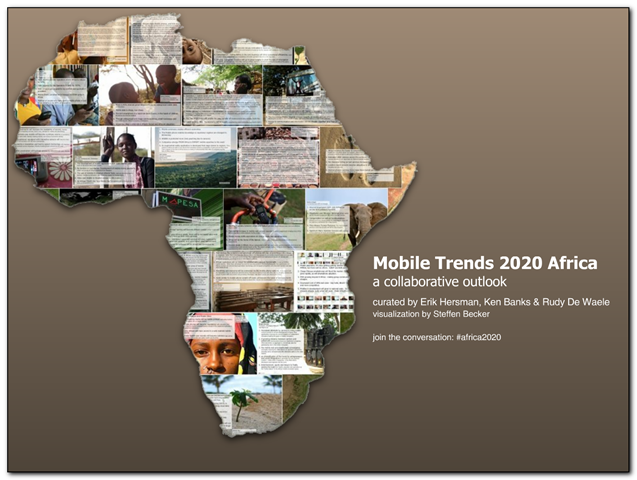
Find out what’s ahead: “Mobile Trends Africa 2020”. >>>
-
Fast Company

With the arrival of broadband, sub-Saharan Africa’s tech entrepreneurs are on the verge of take off. Question is: to where? In Buea, southern Cameroon, the tech boys are pulling an all-nighter. Mambe Nanje Churchill’s fingers go hurtling across the keyboard. With his 20-year-old junior looking on, the 24-year-old self-taught veteran of the local cyber café scene deftly reworks a website banner. It ain’t rocket science, but it pays. Popular with students at the town’s university, the 60 or so cafés straggling along the streets on the green slopes beneath Mount Cameroon have become informal centres for incubating tech entrepreneurs. The… >>>
-
Future Perfect

Zap those economic blues. Seven shiny tech tips from CeBIT 09 The global economic crash getting you down? Take the talking cure. The population of Hanover in northern Germany pretty much doubles once a year when around 500,000 computer and IT industry movers and shakers from all over the world click over to CeBIT, the world’s biggest technology expo. With thousands of exhibitors and hundreds of product launches and demonstrations, CeBit 09 (3-8 March) is about trying out new technologies and thinking around new trends. It’s also about gossiping and partying and getting the face-to-face contact that the stutter of… >>>
-
Spectacle
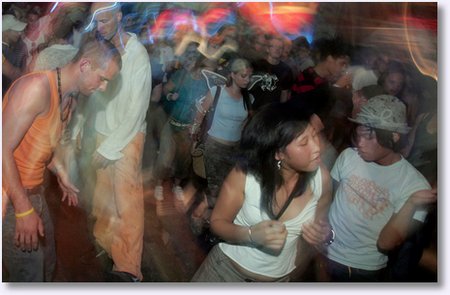
Linz, a sleepy provincial Austrian town? Cuckoo clocks and the sound of music? Where Hitler went to school with Wittgenstein ? Never mind the cobblestones. As the venue for Ars Electronica , one of the biggest digital arts festivals in the world, Linz is heaven for geeks right now, is overclocking with tech-driven spectacle. Back in the 20th Century, when Vienna marked the cutting edge of things, Austrian sophisticates cracked that Linz rhymed with province. Say “province” in an Austrian accent and it ends in “z”. Just like Linz. Geddit? Dear pretty, provincial Linz. No bright lights, no big city:… >>>
-
Shooting War

Just published, graphic novel Shooting War by Anthony Lappe and Dan Goldman: it’s 2011 and anti-corporate blogger Jimmy Burns is working as an embed for Global News – ‘Your home for 24-hour terror coverage’ – in President McCain’s Iraq. And boom. The beta online version is available here. . >>>
-
Cookie-Cutter Journalism
Flip away from the enthusiasms of the Web 2.0/participatory media crowd; the future suddenly loses its shine. In a paper published last year by Harvard’s Shorenstein Center, Robert G Picard gives a detailed account of what’s gone wrong with American news journalism: Many of the challenges of news organization today exist because the professionalism of journalism and journalism education have determined the values and value of the news, commoditized the product, and turned most journalists into relatively interchangeable information factory workers. Average journalists share the same skills sets and the same approaches to stories, seek out the same sources, ask… >>>
-
Storing Futures
An iPod can hold roughly 10,000 songs. Increase the storage capacity every 13 years, something the size of an iPod could store one year of video in another few years. By 2015, you could store all the music ever produced. By 2019, you could 85 years of video – a lifetime’s worth of video. By 2020, the same sized device could store all the content ever created. – David Eun, Google’s VP of Content Partnerships via paidContent.org >>>
-
The Machine is Us/ing Us
Digital ethnographer Michael Wesch ‘s video explains where the web came from, what it is, where it’s taking us: >>>
-
Material World
Donning an avatar (she plumps for a “grumpy old woman”), Jenny Diski discovers that the online virtual world Second Life is less a chance to restart her life, more a cartoon-shaped replication of the real world: Second Life is a reiteration. It’s a virtual world of buying and selling, profit and consumption, material decoration and political apathy. What you get in this alternative world are houses, home decorations, clothes, jewellery, cars, motorbikes, casinos, strip clubs and shops in which to sell all these things to cartoon characters representing their computer owners, who ‘live’ in the houses on the virtual land… >>>